Crushing Machines Overview: Equipment Types, Applications, and Key Features
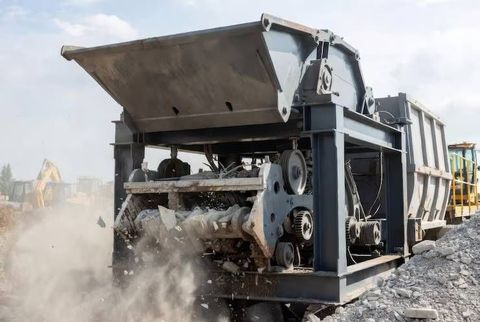
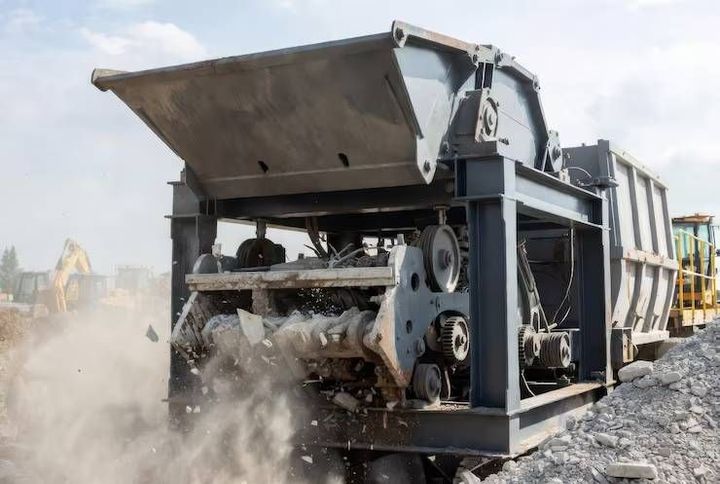
Crushing machines are mechanical equipment used to reduce large pieces of rock, stone, concrete, minerals, and other hard materials into smaller sizes.
They are widely used in aggregate processing, mining, construction, demolition, recycling, and material preparation. The basic purpose is straightforward: a crusher applies mechanical force to break material into pieces that can be screened, transported, reused, or processed further.
The development of crushing equipment is closely connected with the growth of mining, road construction, building development, and mineral processing. Earlier crushing methods relied heavily on manual labor and relatively simple mechanical arrangements. Modern equipment uses engineered crushing chambers, hydraulic systems, electric drives, sensors, and automated controls to handle larger quantities of material with greater process control.
How Crushing Works
A crushing machine normally receives material through a feed opening. Inside the machine, mechanical force is applied through compression, impact, or a combination of movements. The broken material then leaves through an outlet, with the resulting size influenced by the crusher design, chamber configuration, feed characteristics, and operating settings.
Crushing is often only one part of a larger material-processing circuit. After initial size reduction, material may pass through screens, conveyors, washers, separators, or additional crushers. The arrangement depends on the required material size and the characteristics of the feed.
Main Types of Crushing Machines
Different crusher designs are suited to different materials and stages of processing.
- Jaw crushers use a fixed and moving jaw to compress material. They are commonly used for primary crushing of hard rock and large feed material.
- Cone crushers use a rotating crushing element inside a chamber to compress material. They are frequently used for secondary or tertiary crushing.
- Impact crushers break material through high-speed impact. They can be used with various aggregates, recycled materials, and moderately hard feed.
- Hammer crushers use rapidly moving hammers to fracture material. Their applications include certain minerals and materials that respond well to impact.
- Roll crushers use two rotating rolls to compress and reduce material. They can be useful when controlled reduction and a relatively uniform output are required.
- Vertical shaft impact crushers use high-speed material movement and impact to shape or further reduce particles, particularly in aggregate processing.
Importance
Crushing machines matter because many materials cannot be used efficiently in their original form. Large rocks may need to be reduced before they can become aggregate, while demolition materials may require size reduction before sorting and reuse. In mining, crushing is an important stage between extraction and later processing.
Applications Across Industries
Construction projects use crushed stone and other aggregates in roads, foundations, drainage systems, concrete, and related applications. Quarry operations use crushing circuits to process extracted rock into different aggregate sizes.
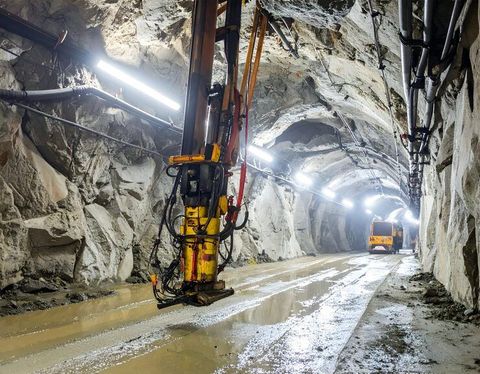
Mining operations use crushers to reduce extracted material before additional separation or mineral-processing stages. The appropriate crusher depends on factors such as hardness, abrasiveness, moisture, feed size, and the required output.
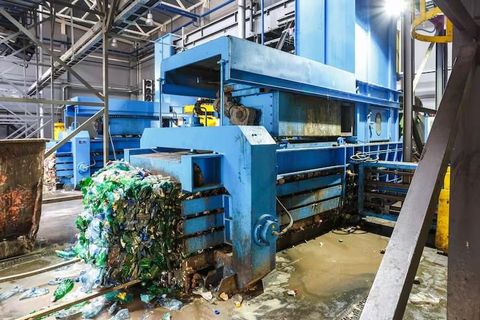
Recycling is another important application. Concrete, asphalt, masonry, and other construction and demolition materials can be processed through suitable crushing and screening equipment. This can help separate usable material from unwanted components and support the reuse of processed aggregates.
Factors That Affect Equipment Selection
Selecting a suitable machine requires more than considering its physical size. Important factors include the type of material, maximum feed size, desired output size, moisture level, abrasiveness, expected throughput, and the number of crushing stages.
Mobility is also relevant. Stationary plants are generally arranged for longer-term processing locations, while mobile and tracked units can be moved between working areas. Compact systems may be appropriate where space is limited, while larger installations can handle substantial material flows.
| Crusher Type | Common Crushing Stage | Typical Material Focus | Main Crushing Principle |
|---|---|---|---|
| Jaw Crusher | Primary | Hard rock, concrete | Compression |
| Cone Crusher | Secondary/Tertiary | Rock, aggregates | Compression |
| Impact Crusher | Primary/Secondary | Aggregate, recycled material | Impact |
| Hammer Crusher | Primary/Secondary | Selected minerals and materials | Impact |
| Roll Crusher | Secondary | Selected minerals and bulk materials | Compression |
| VSI Crusher | Tertiary/Fine | Aggregates and manufactured sand | Impact |
Key Operating Challenges
Crushing creates several practical challenges. Wear on internal components can increase when processing abrasive materials, while inconsistent feed can affect output and machine loading. Dust, vibration, noise, material blockages, and energy use also need to be considered during plant planning and operation.
Regular inspection of wear components, correct feeding, appropriate machine settings, and effective dust-control arrangements can help maintain stable operation. Safety systems, guarding, emergency controls, and proper operating procedures are also important because crushing equipment contains moving components and high mechanical forces.
Recent Updates
From 2024 through 2026, several developments in crushing equipment have focused on electrification, hybrid power, automation, remote monitoring, and improved integration between crushers and screening equipment. Electrification has become a recurring theme in equipment development, particularly for operations seeking alternatives to conventional diesel-driven arrangements.
Electrification and Hybrid Systems
Manufacturers have introduced tracked crushing and screening systems that combine electric drives with onboard generators or external electrical connections. These arrangements can provide flexibility between grid-connected operation and locations where an external electrical supply is unavailable.
In India, Finlay introduced a tracked hybrid range during 2026 consisting initially of a jaw crusher and a cone crusher. The equipment can use mains electricity where available or an onboard diesel-powered generator for remote operation.
Automation and Digital Monitoring
Automation is also becoming more integrated into crushing plants. Sensors, electronic controls, machine monitoring, and remote diagnostic functions can provide information about equipment condition, operating parameters, and potential maintenance requirements.
Recent equipment developments have combined automated controls with remote monitoring platforms. These systems can help operators observe machine performance and respond to operating conditions without relying entirely on manual inspection.
Integrated Processing Systems
Another trend is greater integration between crushing, screening, and conveying equipment. Rather than treating each machine as an isolated unit, newer systems increasingly coordinate several stages through shared controls and electrical arrangements. This approach can simplify monitoring and help maintain a more consistent material flow through the processing circuit.
Tools and Resources
Several resources can help readers understand crushing machines and compare technical requirements.
Equipment Specification Sheets
Manufacturer specification sheets can provide information about feed openings, crusher chamber dimensions, operating weight, power requirements, adjustment ranges, and expected production characteristics. These documents are useful when comparing equipment configurations.
Material Testing and Sizing Tools
Material analysis can help determine hardness, abrasiveness, moisture, particle-size distribution, and other characteristics. Laboratory testing and particle-size analysis can provide useful information before a crushing circuit is designed or modified.
Calculation Tools
Basic calculation tools can help estimate material flow, conveyor requirements, power demand, reduction ratios, and approximate processing capacity. These calculations should be interpreted alongside actual material properties and equipment specifications rather than used in isolation.
Industry and Regulatory Resources
Technical publications from equipment manufacturers, quarrying organizations, mining institutions, and environmental authorities can provide information about equipment operation, dust control, noise management, electrical systems, and workplace safety. Local regulations may also establish requirements for emissions, noise, machine guarding, and site operation.
FAQs
What are crushing machines used for?
Crushing machines reduce large materials such as rock, concrete, minerals, and demolition debris into smaller particles. The processed material may then undergo screening, sorting, washing, or additional size reduction.
What are the main types of crushing machines?
Common types include jaw, cone, impact, hammer, roll, and vertical shaft impact crushers. Each design applies mechanical force differently and is suited to particular materials and processing stages.
How do crushing machines differ by application?
The required machine depends on material hardness, feed size, moisture, abrasiveness, desired output, and processing stage. Mining, quarrying, construction, and recycling operations can therefore use different crusher configurations.
Are modern crushing machines automated?
Many modern systems include electronic controls, sensors, monitoring functions, and automated adjustment features. The level of automation varies by equipment model and plant configuration.
What recent trends affect crushing machines?
Recent trends include electric and hybrid drives, digital monitoring, automation, mobile processing, and closer integration between crushing and screening equipment. These developments are intended to improve operational control, energy management, and flexibility.
Conclusion
Crushing machines are important components of material-processing operations across mining, construction, quarrying, and recycling. Jaw, cone, impact, hammer, roll, and vertical shaft impact crushers perform different size-reduction tasks based on material characteristics and processing requirements. Recent developments have increasingly focused on electrification, hybrid power, automation, digital monitoring, and integrated processing systems. Understanding crusher types, applications, operating principles, and key features provides a useful foundation for understanding modern material-processing equipment.