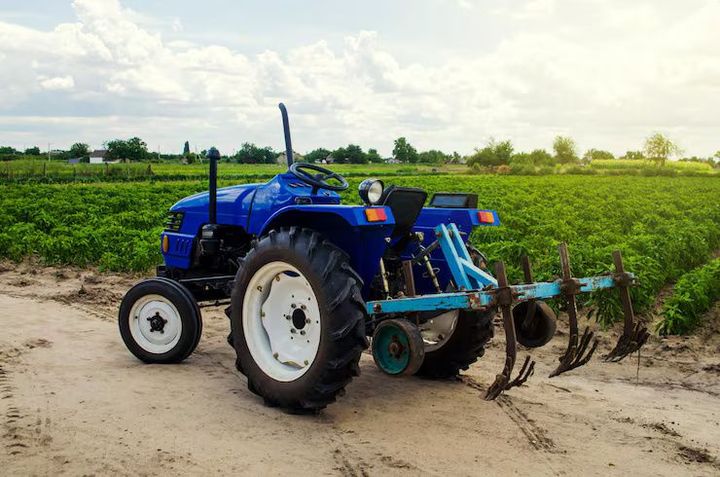
Farm Equipment Basics: A Guide to Essential Agricultural Tools and Machines
Farm equipment refers to the tools, machines, and mechanical systems used to prepare land, plant crops, manage fields, harvest produce, and handle agricultural materials.
From simple hand tools to tractors and specialized machines, these resources have developed alongside farming practices to reduce physical effort and improve the consistency of routine agricultural work.
Traditional farming relied heavily on human and animal power. Basic implements such as hoes, plows, sickles, and carts helped farmers prepare soil and gather crops. As agriculture expanded, mechanical equipment became more common, particularly for tasks that require significant pulling, lifting, cutting, digging, or repeated movement.
Today, farm equipment includes machines of many sizes and designs. A small vegetable farm may use walk-behind tillers, seeders, irrigation equipment, and hand tools, while a large grain operation may use tractors, planters, sprayers, combines, grain handling equipment, and precision agriculture technology.
The choice of equipment depends on several factors, including farm size, soil conditions, crop type, terrain, available labor, maintenance requirements, and the frequency of particular tasks. Understanding these basics helps explain how different agricultural machines fit into the overall farming process.
Importance
Farm equipment matters because agricultural work involves many repetitive and physically demanding activities. Preparing soil, placing seeds at consistent depths, moving materials, controlling weeds, harvesting crops, and transporting produce can require substantial time and physical effort when performed entirely by hand.
Equipment can also help farmers perform tasks with greater consistency. For example, a planter can place seeds at relatively uniform spacing, while a harvester can gather mature crops across large areas. Irrigation equipment can distribute water according to the layout of a field, while soil-working equipment can prepare planting areas.
Different types of equipment address different stages of crop production:
- Land preparation: Plows, harrows, cultivators, and rotary tillers can help prepare or loosen soil.
- Planting: Seed drills, planters, and transplanters place seeds or young plants in prepared areas.
- Crop management: Cultivators, sprayers, irrigation systems, and monitoring tools support field management.
- Harvesting: Combines, forage harvesters, reapers, and specialized harvesters are designed for particular crops.
- Material handling: Trailers, loaders, conveyors, and storage systems help move agricultural materials.
- Maintenance: Greasing tools, replacement components, inspection equipment, and cleaning tools help maintain machinery.
The scale of equipment also affects how it fits into a farm. Compact machines may be practical where fields are small or access is limited. Larger machines are generally designed for extensive field operations and may require wider working areas, stronger storage facilities, and suitable transport arrangements.
| Equipment | Common purpose | Typical operating area |
|---|---|---|
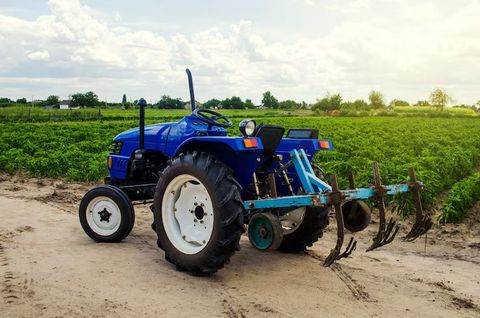
| Tractor | Pulling and powering implements | Fields, orchards, farms |
| Plow | Initial soil preparation | Open fields |
| Harrow | Breaking soil clumps and leveling | Prepared fields |
| Planter | Seed placement | Crop fields |
| Cultivator | Soil and weed management | Crop rows |
| Irrigation system | Water distribution | Fields, gardens, orchards |
| Combine harvester | Harvesting and separating grain crops | Grain fields |
| Trailer | Material transportation | Farm and road areas |
Safe operation is another important part of farm equipment basics. Machines contain moving components, cutting mechanisms, hot surfaces, hydraulic systems, and other potential hazards. Operators generally need appropriate training, protective equipment where applicable, and attention to manufacturer instructions.
Recent Updates
Agricultural equipment has increasingly incorporated digital technology. Current machinery may include electronic displays, satellite positioning, automated guidance, field mapping, sensors, and data recording systems. These technologies can help operators monitor machine performance and field activities.
Precision agriculture is another continuing trend. Instead of treating an entire field as identical, precision systems can use location and sensor data to identify differences in soil conditions, crop growth, moisture, or field performance. This approach can support more targeted agricultural decisions.
Automation is also becoming more visible across farming. Automated steering systems can assist with maintaining field paths, while robotic and semi-autonomous equipment is being developed for tasks such as crop monitoring, weeding, harvesting, and material movement. Adoption varies according to farm size, crop type, infrastructure, and local conditions.
Electrification is another area of development. Battery-powered equipment is increasingly appearing in smaller agricultural applications, particularly for tools and compact machinery. Larger agricultural machines present different technical challenges because their work can require substantial energy over long operating periods.
Equipment manufacturers are also placing greater attention on connectivity and machine data. Connected systems can record operating hours, fuel or energy use, maintenance information, field activity, and machine performance. These developments are changing farm equipment from purely mechanical tools into increasingly connected systems.
Despite these changes, conventional equipment remains widely used. Tractors, tillage implements, planters, irrigation systems, harvesters, trailers, and hand tools continue to form the foundation of many agricultural operations.
Tools and Resources
Several practical resources can help people understand agricultural machinery and plan equipment use. Manufacturer manuals provide specifications, operating instructions, maintenance schedules, safety information, and compatible implement details for particular machines.
Agricultural extension websites and educational institutions also publish guides covering machinery selection, field operations, equipment safety, soil management, irrigation, and crop production. These resources can be useful for readers who want information based on agricultural research and regional practices.
Equipment comparison worksheets can help organize information about machine size, power requirements, working width, operating capacity, maintenance intervals, and compatibility. A simple spreadsheet can make it easier to compare several machines without relying on a single specification.
Useful tools and resources include:
- Equipment manuals: Instructions and technical information for specific machines.
- Agricultural extension resources: Educational material about crops, machinery, and field practices.
- Machinery calculators: Tools for estimating field capacity, operating time, or power requirements.
- Maintenance checklists: Records for inspections, lubrication, cleaning, and component checks.
- Field maps: Basic maps or digital mapping platforms for planning routes and field operations.
- Weather and soil information: Data that can help explain field conditions before agricultural activities.
Equipment specifications should always be interpreted in relation to the actual farming environment. A machine designed for one soil type, crop, or field size may not perform in the same way under different conditions.
FAQs
What is farm equipment?
Farm equipment includes tools and machines used for agricultural activities such as soil preparation, planting, crop management, harvesting, transportation, and material handling.
What are the main types of farm equipment?
Common categories include tractors, tillage equipment, planters, cultivators, irrigation systems, harvesters, trailers, loaders, and hand tools. Each category is designed for particular agricultural tasks.
How does farm equipment improve agricultural work?
Farm equipment can reduce physical effort, support consistent field operations, and allow certain activities to be completed across larger areas. Its usefulness depends on appropriate equipment selection, operation, and maintenance.
What should beginners know about farm equipment basics?
Beginners should understand the purpose of each machine, basic operating procedures, safety precautions, maintenance requirements, and compatibility between tractors and implements. Manufacturer documentation and agricultural education resources can provide additional technical information.
What are recent trends in farm equipment?
Recent trends include precision agriculture, automated guidance, connected machinery, sensor-based monitoring, robotics, and increased interest in electric power for selected equipment categories. Adoption differs across regions and types of farming.
Conclusion
Farm equipment includes a wide range of tools and machines used throughout agricultural production. Tractors, implements, planters, irrigation systems, harvesters, and material-handling equipment each have specific functions within farm operations. Modern developments are adding digital controls, automation, connectivity, and alternative power systems to established agricultural machinery. Understanding the purpose, operating requirements, safety considerations, and maintenance needs of each equipment category provides a useful foundation for learning about modern farming.