Wire Cut EDM Machine Basics: Learning About Components and Cutting Processes
A Wire Cut EDM Machine is a computer-controlled machining system that uses electrical discharges to cut electrically conductive materials.
Instead of using a blade or conventional cutting tool, it guides a thin metal wire along a programmed path while controlled sparks remove tiny amounts of material. Understanding Wire Cut EDM Machine basics helps general readers see how its components work together, why the process is used for complex shapes, and how modern systems are becoming more automated and data-driven.
Context
What Is a Wire Cut EDM Machine?
Wire Cut EDM, also called Wire Electrical Discharge Machining or WEDM, is a form of non-contact machining. The process developed from electrical discharge machining, which removes material through controlled electrical energy rather than direct mechanical cutting.
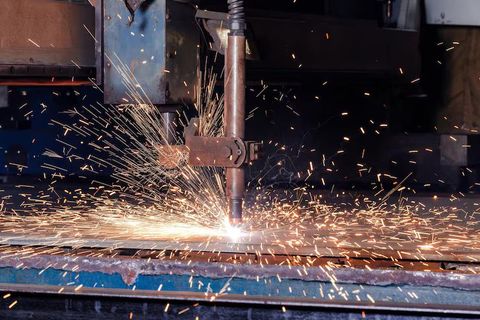
A thin conductive wire acts as an electrode. The wire and the workpiece are separated by a very small gap filled with dielectric fluid, usually deionized water. When controlled electrical pulses pass across this gap, sparks generate localized heat that melts or vaporizes very small portions of the workpiece. The fluid then helps cool the cutting area and carry away particles.
The workpiece must normally be electrically conductive. Common materials include tool steels, hardened steels, titanium alloys, nickel-based alloys, copper alloys, and other conductive metals. Because the wire does not physically push through the material, the process can create detailed profiles while producing relatively little mechanical cutting force.
Main Components
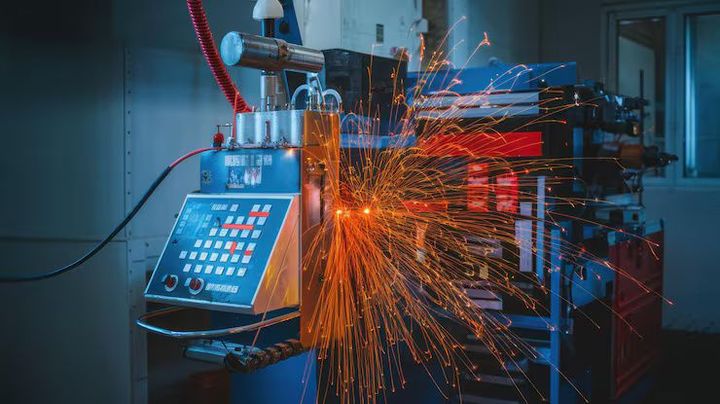
A Wire Cut EDM Machine contains several systems that operate together:
- Wire electrode system: Feeds thin wire continuously through the cutting area.
- CNC control system: Translates programmed instructions into coordinated machine movements.
- Power supply: Generates controlled electrical pulses between the wire and workpiece.
- Dielectric system: Circulates and filters deionized water around the cutting zone.
- Wire guides: Keep the electrode accurately positioned above and below the workpiece.
- Worktable and axis system: Moves the workpiece or cutting path according to the programmed geometry.
- Servo system: Maintains the appropriate distance between the wire and workpiece.
- Wire collection system: Guides used wire toward a collection area after cutting.
Modern machines may also include automatic wire threading, multi-axis movement, monitoring functions, and integrated CAD/CAM capabilities.
How the Cutting Process Works
The cutting process generally begins with a digital drawing or CNC program. The workpiece is positioned securely, and the wire is threaded through the required starting point.
The machine then establishes controlled electrical discharges between the wire and workpiece. Each discharge removes a very small quantity of material. The CNC system continuously moves the wire according to the programmed profile while the dielectric fluid removes machining debris.
For some applications, several passes are used. An initial pass removes most of the material, while later passes can refine the profile and surface condition. Multi-axis movement can also allow the wire to follow angled paths for tapered features.
Importance
Why Wire EDM Matters
Wire EDM is particularly relevant when a component has a complicated profile, narrow internal features, or requires controlled machining of hardened conductive material. Conventional cutting tools can experience mechanical forces and tool wear, whereas Wire EDM relies primarily on electrical and thermal effects.
The process is also useful for components where dimensional control and detailed geometry are important. Industries that use wire EDM include mold and die manufacturing, aerospace-related production, medical equipment manufacturing, toolmaking, and precision engineering.
A major consideration is that Wire EDM is not a universal cutting method. It requires electrically conductive material, and cutting speed can depend on material thickness, electrical settings, wire characteristics, flushing conditions, and the desired surface quality.
Key Factors That Affect Cutting
Several operating conditions influence the result:
| Factor | Role in the Process |
|---|---|
| Wire diameter | Influences the minimum achievable internal radius |
| Electrical pulse settings | Affect material removal and surface condition |
| Wire tension | Helps maintain controlled wire positioning |
| Dielectric flow | Removes debris and supports stable sparking |
| Workpiece thickness | Influences flushing and machining behavior |
| CNC movement | Determines the programmed cutting path |
| Number of passes | Can influence profile accuracy and surface quality |
Understanding these factors is important because changing one parameter can influence several aspects of machining at the same time.
Practical Challenges
Wire EDM can involve challenges such as wire breakage, unstable electrical discharges, debris accumulation, inaccurate alignment, and changes in surface condition. Maintaining clean dielectric fluid and stable wire guidance is therefore an important part of consistent operation.
The cutting process also produces heat-affected and recast layers on the machined surface. Their characteristics depend on electrical parameters and machining conditions, which is why process control remains important when working with precision components.
Recent Updates
Greater Use of Monitoring and Data Analysis
Developments from 2024 through 2026 show growing attention toward energy management, real-time monitoring, adaptive control, and data-based process optimization. Research published in 2024 examined models for predicting energy consumption and carbon emissions in wire EDM, showing increased interest in measuring the environmental aspects of machining.
Research published in 2026 has also explored using electrical signals and machine learning to identify discharge locations during WEDM. Such approaches are intended to provide more information about process stability and support adaptive control while cutting.
Automation and Intelligent Control
Another current direction is the integration of sensors, machine learning, and digital models with EDM equipment. A 2026 study investigated a physics-informed digital twin using multiple signals, including electrical measurements, temperature, and acoustic information, for real-time WEDM monitoring and adaptive control.
Machine development is also placing attention on automatic wire threading, corner control, nozzle control, diagnostics, and process stability. These developments show that modern Wire Cut EDM Machine technology is moving beyond basic CNC movement toward greater process monitoring and automated control.
Continued Research on Difficult Materials
Recent research continues to examine wire EDM for materials that are challenging to machine using conventional methods. Studies involving titanium alloys and shape-memory alloys have investigated how electrical parameters influence material removal and surface characteristics.
The broader trend is toward more controlled machining processes in which electrical signals, machine movement, fluid conditions, and material behavior can be monitored together.
Tools and Resources
Design and Programming Tools
CAD and CAM platforms are commonly used to create component drawings and prepare machining paths. CNC programming interfaces then translate the required geometry into instructions for machine axes and cutting parameters.
Measurement Equipment
Inspection tools can help verify dimensions after machining. Depending on the component, these may include coordinate measuring machines, optical measurement systems, micrometers, and surface-measurement instruments.
Process Monitoring Resources
Modern Wire Cut EDM Machine systems may include built-in diagnostic displays, parameter monitoring, data logging, and machine communication functions. Technical manuals and manufacturer documentation can help users understand axis configuration, wire threading procedures, dielectric requirements, alarms, and operating parameters.
FAQs
What is a Wire Cut EDM Machine used for?
A Wire Cut EDM Machine is used to cut electrically conductive materials into precise profiles. It is commonly associated with complex shapes, narrow features, hardened metals, molds, dies, and precision components.
How does a Wire Cut EDM Machine cut metal?
The machine uses a thin wire electrode and controlled electrical sparks. The sparks generate localized heat that removes small portions of conductive material while the CNC system guides the wire along the programmed path.
What are the main Wire Cut EDM Machine components?
Important components include the CNC controller, wire electrode, power supply, wire guides, servo system, worktable, dielectric circulation system, filtration system, and wire collection mechanism.
Does Wire EDM use a cutting blade?
No. Wire EDM does not use a conventional blade. Material is removed through controlled electrical discharges between the wire electrode and the conductive workpiece.
What materials can Wire Cut EDM process?
Wire EDM can process many electrically conductive metals and alloys, including hardened steels, tool steels, titanium alloys, nickel-based alloys, and copper-based materials. Material behavior and suitable machining parameters vary according to the application.
Conclusion
A Wire Cut EDM Machine uses controlled electrical discharges, a thin wire electrode, dielectric fluid, and CNC movement to create detailed profiles in conductive materials. Its main components work together to control wire position, electrical energy, fluid flow, and cutting movement. From 2024 through 2026, development has increasingly focused on process monitoring, energy analysis, adaptive control, automation, and data-based machining. These developments reflect the continuing evolution of wire EDM from a conventional precision-cutting process toward more connected and intelligently monitored manufacturing systems.