Industrial Valves Basics: Learn About Flow Control and Valve Mechanisms
Industrial valves are mechanical devices used to control the movement of liquids, gases, steam, and other fluids through pipelines and industrial systems.
Industrial valves basics involve understanding how these devices regulate flow, manage pressure, prevent backflow, and isolate sections of a system. They are essential components in manufacturing plants, water treatment facilities, energy production, chemical processing, and many other industrial applications.
The development of industrial valves is closely connected to the growth of water distribution, steam-powered machinery, and modern manufacturing. As industrial processes became more complex, the need for accurate fluid control increased. Valves evolved from simple manually operated mechanisms into advanced equipment that can regulate flow automatically through sensors, actuators, and electronic control systems.
What Are Industrial Valves?
An industrial valve is a device installed within a pipeline or fluid system to control the direction, pressure, and volume of flowing materials. Depending on its design, a valve can start or stop fluid movement, adjust flow rates, prevent reverse flow, or release excess pressure.
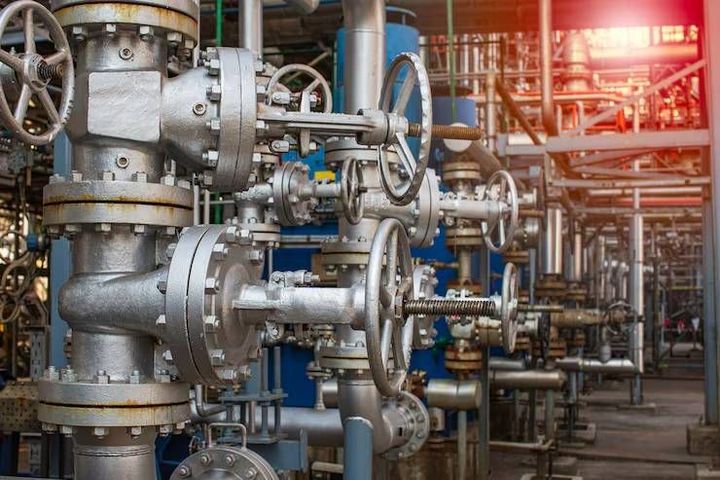
Most industrial valves contain a body, an internal closing mechanism, and an operating component. The closing mechanism may be a disc, ball, plug, gate, or flexible diaphragm. These parts work together to regulate the passage of fluid according to the requirements of a particular application.
How Do Valve Mechanisms Work?
Valve mechanisms operate by changing the size or condition of an internal passage through which fluids travel. Some valves use rotating components, while others rely on linear movement to open or close the flow path.
Manual valves are operated using handwheels, levers, or handles. Automated valves use electric, pneumatic, or hydraulic actuators to move internal components. The operating method depends on the required control accuracy, operating environment, and characteristics of the fluid.
Importance
Industrial valves play an important role in maintaining the operation, stability, and safety of industrial systems. They help manage fluid movement in environments where uncontrolled flow, pressure changes, or leakage can interrupt processes or damage equipment.
These devices are used in industries that affect everyday activities, including drinking water distribution, electricity generation, food processing, transportation, and building operations. Their functions support the movement of essential materials through complex networks of pipes and machinery.
Applications Across Different Industries
Industrial valves are used in a wide range of environments, with their design and operating mechanisms selected according to specific process requirements.
- Water treatment: Valves regulate water movement during filtration, purification, storage, and distribution.
- Oil and gas: Specialized valves control the movement of petroleum products, natural gas, and other process fluids.
- Chemical processing: Valves manage the flow of liquids and gases while accounting for chemical compatibility, temperature, and pressure.
- Power generation: Valves regulate steam, cooling water, and other fluids used in electricity production.
- Food and beverage: Hygienic valve designs support the controlled movement of ingredients, liquids, and cleaning materials.
- Pharmaceutical manufacturing: Suitable valve arrangements help manage fluid transfer and maintain controlled production environments.
Flow Control and Operational Safety
Flow control is one of the primary functions of industrial valves. Regulating the volume and direction of fluid movement helps industrial systems operate within their intended process conditions. Isolation valves also allow sections of a pipeline to be separated during inspections, repairs, or equipment changes.
Pressure-relief valves perform a separate safety function by releasing excess pressure when predetermined conditions are reached. Check valves help prevent reverse flow, which can otherwise affect pumps, pipelines, and connected equipment. Correct valve selection, installation, and inspection are important considerations for maintaining system integrity.
Common Industrial Valve Types
Different valve designs perform different functions. The following table outlines several widely used types and their general applications.
| Valve Type | Main Function | Common Application |
|---|---|---|
| Gate valve | Starts or stops flow | Water pipelines |
| Globe valve | Regulates flow | Steam and process systems |
| Ball valve | Provides shutoff | Liquid and gas pipelines |
| Butterfly valve | Controls or isolates flow | Large-diameter pipelines |
| Check valve | Prevents reverse flow | Pumping systems |
| Plug valve | Controls or isolates flow | Industrial fluid networks |
| Diaphragm valve | Controls fluid using a flexible membrane | Chemical and hygienic systems |
| Pressure-relief valve | Releases excess pressure | Pressurized equipment |
Each valve type has specific operating characteristics. For example, gate valves are generally intended for fully open or fully closed operation, while globe valves are commonly used for flow regulation.
Recent Updates
Industrial valve technology continues to develop in response to changing manufacturing requirements, energy efficiency objectives, automation, and environmental considerations. Current developments focus on improving monitoring, control accuracy, material performance, and equipment reliability.
Smart Valves and Industrial Automation
Digital monitoring is becoming increasingly integrated into industrial fluid control systems. Automated valves equipped with electronic actuators, position sensors, and communication capabilities can provide information about operating conditions to centralized control systems.
These technologies allow operators to monitor valve positions, identify irregular operating patterns, and coordinate fluid movement across connected equipment. Integration with industrial automation platforms can also support process monitoring and predictive maintenance activities.
Energy Efficiency and Environmental Considerations
Industrial facilities are paying greater attention to energy consumption, fluid losses, and emissions associated with pipeline operations. Valve designs that reduce unnecessary pressure losses and improve sealing can contribute to more efficient system operation.
Manufacturers are also developing materials and sealing technologies suited to demanding operating environments. These developments support efforts to reduce leakage, improve durability, and manage the environmental effects of industrial processes.
Advanced Materials and Manufacturing
Material selection remains an important area of industrial valve development. Stainless steel, specialized alloys, engineered polymers, and corrosion-resistant coatings are used according to fluid composition, temperature, and pressure conditions.
Advances in precision manufacturing and digital design tools are also supporting the production of valve components with controlled dimensions and performance characteristics. These developments are relevant to industries that handle corrosive, abrasive, or high-temperature materials.
Tools and Resources
Several technical resources help engineers, technicians, students, and industrial operators understand valve mechanisms, evaluate system requirements, and interpret operating conditions.
Valve Selection and Calculation Tools
Valve sizing calculators help estimate the appropriate valve capacity for a particular flow condition. These tools may use factors such as fluid density, pressure differential, flow rate, and temperature. Their results depend on the accuracy of the input information and the calculation method.
Common technical resources include:
- Valve sizing calculators: Estimate flow capacity and valve dimensions for specific operating conditions.
- Pressure-drop calculators: Estimate pressure changes as fluids pass through pipelines and valves.
- Flow measurement tools: Measure fluid movement and help assess system performance.
- CAD software: Supports the design and visualization of valve assemblies, pipelines, and connected components.
- Digital monitoring platforms: Display operating data from sensors, actuators, and automated control systems.
Technical Standards and Educational Resources
Organizations such as the International Organization for Standardization (ISO), the American Society of Mechanical Engineers (ASME), and the American Petroleum Institute (API) publish standards and technical documents relevant to industrial valves. These resources cover areas such as design, testing, dimensions, pressure ratings, and operational requirements.
Manufacturer technical manuals, engineering textbooks, and industrial training materials also explain valve construction, installation principles, and inspection procedures. Such references help readers understand the technical characteristics of different valve mechanisms and their intended applications.
FAQs
What Are Industrial Valves Used For?
Industrial valves control, regulate, isolate, and redirect the movement of liquids, gases, steam, and other fluids in pipelines and industrial equipment.
What Are the Main Types of Industrial Valves?
Common types include gate, globe, ball, butterfly, check, plug, diaphragm, and pressure-relief valves. Each type has a different mechanism and intended function.
How Do Industrial Valve Mechanisms Work?
Industrial valve mechanisms control flow by moving an internal component, such as a disc, ball, gate, or diaphragm. Movement changes the flow passage, allowing fluid to pass, restricting it, or stopping it.
What Is the Difference Between a Gate Valve and a Globe Valve?
A gate valve is generally used to isolate flow by opening or closing a passage. A globe valve uses a movable disc to regulate flow and is commonly applied where flow adjustment is required.
What Are Smart Industrial Valves?
Smart industrial valves use electronic actuators, sensors, or digital communication systems to support automated operation and provide information about valve position and operating conditions.
Conclusion
Industrial valves are essential components of fluid control systems across manufacturing, energy, water treatment, and chemical processing. Their different mechanisms support flow regulation, pipeline isolation, backflow prevention, and pressure management. Developments in automation, digital monitoring, and advanced materials continue to influence industrial valve technology. Understanding valve types, operating principles, and applications provides a foundation for learning how modern industrial fluid systems function.