Cold Chain Packaging Guide: Understanding Temperature-Controlled Packaging
Cold chain packaging is designed to help products remain within a required temperature range while they move through storage, transportation, and handling.
A Cold Chain Packaging Guide helps explain how insulated containers, refrigerants, temperature monitors, and packaging layouts work together to protect temperature-sensitive products. This approach is used across food distribution, biotechnology, laboratory materials, agriculture, and other industries where temperature changes can affect product condition.
Understanding Cold Chain Packaging
What Cold Chain Packaging Means
Cold chain packaging is a combination of materials and components that helps control the temperature surrounding a packaged product. Unlike ordinary packaging, it is designed around a specific temperature range and an expected transportation period.
The basic system generally includes an insulated container, thermal-control materials, internal packaging, and sometimes temperature-monitoring equipment. The goal is to reduce the effect of outside temperatures and maintain suitable conditions during handling and transit.
Where the Concept Comes From
The cold chain developed from the need to preserve temperature-sensitive goods between production and final use. Refrigerated transport, insulated storage, ice-based cooling, and later phase-change materials gradually became part of modern temperature-controlled logistics.
Today, cold chain packaging can range from simple insulated boxes with frozen refrigerants to engineered systems designed for longer transportation periods. The appropriate configuration depends on the product, temperature range, route, season, handling conditions, and expected transit duration.
Main Components
A typical temperature-controlled package may contain several layers that perform different functions:
- Insulated container: Reduces heat transfer between the package interior and surrounding environment.
- Refrigerant or thermal-control material: Absorbs incoming heat or maintains the desired temperature range.
- Product compartment: Keeps the contents positioned correctly and separated from cooling materials when necessary.
- Protective packaging: Helps prevent movement, impact, moisture exposure, and physical damage.
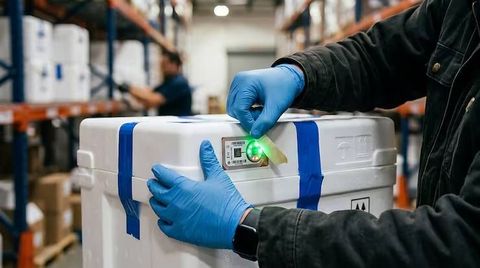
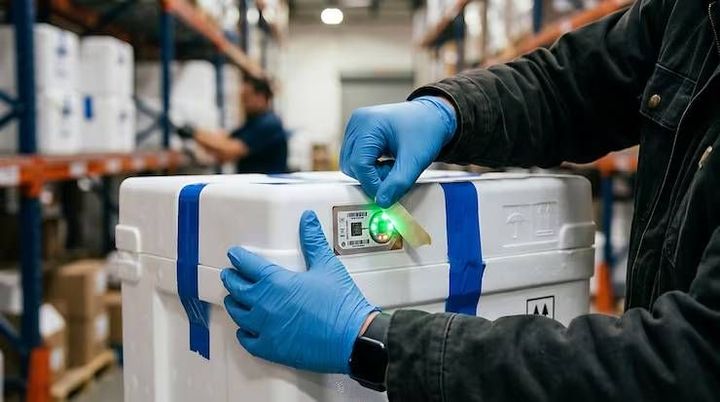
- Temperature monitor: Records or indicates temperature conditions during transportation.
These elements work together rather than independently. Poor placement of cooling materials or inadequate insulation can affect the temperature inside the package even when individual components are appropriate.
Why Cold Chain Packaging Matters
Protecting Temperature-Sensitive Products
Temperature can influence freshness, texture, stability, and physical properties. Food products may deteriorate when exposed to unsuitable conditions, while some biological and laboratory materials can require controlled environments to maintain their intended characteristics.
Cold chain packaging therefore provides a physical layer of temperature control between the product and changing external conditions. It is particularly important when packages pass through different climates, transportation modes, or storage environments.
Supporting Transportation and Handling
A package may encounter warehouses, loading areas, delivery vehicles, airports, and other locations during its journey. These environments can have different temperatures, making thermal protection an important consideration.
Packaging also needs to tolerate handling and movement. Insulation alone does not protect against every transportation risk, so structural protection and appropriate internal positioning are also relevant.
Common Challenges
Several factors can influence temperature performance:
- Ambient temperature changes
- Length of transportation
- Exposure during loading and unloading
- Incorrect refrigerant placement
- Insufficient insulation
- Excessive empty space inside the container
- Repeated opening of the package
- Incorrect preparation before shipment
Understanding these variables helps explain why cold chain packaging is usually designed around a particular transportation scenario rather than treated as a universal container.
Temperature Ranges and Applications
Different products require different environmental conditions. The following table provides general examples rather than universal requirements.
| Temperature Environment | Typical Packaging Approach | Example Applications |
|---|---|---|
| Chilled | Insulation with refrigerated or phase-change materials | Fresh foods and some laboratory materials |
| Controlled cool | Insulation with suitable thermal packs | Temperature-sensitive products |
| Frozen | High-performance insulation with frozen refrigerants | Frozen foods and selected materials |
| Ambient controlled | Insulation and temperature monitoring | Products sensitive to excessive heat or cold |
Actual temperature requirements depend on the specific product and its handling instructions.
Recent Trends in Cold Chain Packaging
Greater Use of Phase-Change Materials
Phase-change materials are increasingly used in temperature-controlled packaging because they can be selected to maintain particular temperature ranges during a defined period. Unlike conventional frozen packs, some phase-change materials are formulated around specific transition temperatures.
This allows packaging designs to be matched more closely with the temperature requirements of individual products. Their use is part of a broader movement toward more controlled and predictable thermal performance.
Improved Temperature Monitoring
Digital temperature monitoring has become more common across temperature-controlled transportation. Sensors and data loggers can record conditions throughout a journey, allowing temperature information to be reviewed afterward.
Connected monitoring systems can also transmit temperature information during transportation when network connectivity is available. This creates greater visibility into environmental conditions and can help identify where temperature deviations occurred.
More Attention to Packaging Materials
Environmental considerations have also influenced cold chain packaging development. Manufacturers and logistics planners are examining recyclable, reusable, lightweight, and lower-waste insulation materials while still considering thermal performance.
The challenge is balancing insulation requirements, durability, material use, and end-of-life handling. A reduction in packaging volume does not automatically mean equivalent thermal protection, so material selection remains an engineering consideration.
Data-Based Packaging Design
Packaging qualification is increasingly supported by temperature testing, route analysis, seasonal conditions, and recorded shipment data. These approaches can help identify how a package behaves under different environmental conditions.
Simulation and laboratory testing can also be used to evaluate insulation thickness, refrigerant placement, container size, and expected thermal duration before a packaging configuration is used in regular transportation.
Tools and Resources for Cold Chain Packaging
Temperature Calculators
Online thermal and temperature calculators can help users understand temperature conversions, duration assumptions, and basic heat-transfer concepts. They are useful for learning, although detailed packaging qualification requires product-specific testing.
Temperature Data Loggers
Temperature data loggers record conditions during transportation. Depending on the device, information may be stored locally or transferred digitally for later analysis.
Packaging Testing Templates
A packaging test template can document important factors such as container dimensions, insulation type, refrigerant configuration, ambient conditions, product load, transportation duration, and measured internal temperatures.
A basic test record can include:
- Product temperature requirement
- Target transportation duration
- Expected ambient range
- Insulation configuration
- Refrigerant type and quantity
- Sensor locations
- Temperature readings
- Observed deviations
Industry and Regulatory Resources
Organizations such as the International Air Transport Association, ASTM International, and national food or pharmaceutical regulatory authorities publish technical information relevant to temperature-controlled transportation. Their documents can help readers understand terminology, testing concepts, handling practices, and transportation considerations.
The appropriate guidance depends on the product category and the country or transportation network involved.
FAQs
What is cold chain packaging?
Cold chain packaging is packaging designed to help maintain a specified temperature range around temperature-sensitive contents during storage and transportation. It commonly uses insulation, thermal-control materials, and temperature monitoring.
How does a Cold Chain Packaging Guide help?
A Cold Chain Packaging Guide explains the components, temperature ranges, preparation methods, monitoring approaches, and common challenges associated with temperature-controlled packaging. It provides general background for understanding how thermal protection systems are designed.
What materials are used in cold chain packaging?
Common materials include insulated foams, fiber-based insulation, vacuum insulation panels, gel packs, frozen refrigerants, and phase-change materials. The selection depends on the required temperature range, transportation duration, container design, and product characteristics.
Why is temperature monitoring important in cold chain packaging?
Temperature monitoring provides information about the conditions experienced by a package during transportation. Recorded data can help identify temperature fluctuations and determine whether the expected environmental conditions were maintained.
How long can cold chain packaging maintain temperature?
There is no single duration that applies to every package. Thermal duration depends on insulation, refrigerant configuration, container size, starting temperature, ambient conditions, product load, and transportation conditions.
Conclusion
Cold chain packaging combines insulation, thermal-control materials, protective structures, and monitoring methods to help manage temperature-sensitive products during transportation and storage. Its design depends on factors such as temperature range, transit duration, external conditions, and product characteristics. Recent developments include wider use of phase-change materials, digital temperature monitoring, data-based testing, and increased attention to packaging materials. Understanding these elements provides a useful foundation for interpreting temperature-controlled packaging systems.