Industrial Hose Pipe Guide to Types, Materials, and Industrial Applications
An industrial hose pipe is a flexible tube designed to transport liquids, gases, air, powders, or other materials between equipment and locations.
Industrial hose pipes are used in manufacturing plants, construction sites, agricultural operations, chemical processing facilities, and transportation systems. Understanding an industrial hose pipe guide to types, materials, and industrial applications helps explain how these products work and why their construction varies according to the material being transported.
Unlike rigid pipes, hoses can bend around equipment, absorb some movement, and connect machinery that may not remain in a fixed position. Their flexibility makes them useful in systems where vibration, changing equipment positions, or frequent connection and disconnection are part of normal operations.
Industrial hoses are manufactured from materials such as rubber, thermoplastics, silicone, and metal. Some include reinforcement layers made from textile fibers, wire braiding, or steel spirals. These layers help the hose withstand particular pressure, temperature, and mechanical conditions.
How Industrial Hose Pipes Work
An industrial hose pipe creates a contained passage between two points. One end may connect to a pump, compressor, tank, or production machine, while the other connects to receiving equipment or a distribution line.
The material moves through the hose because of gravity, pumping, compressed air, or another pressure difference. The hose's construction must suit the transported material and operating conditions. A hose intended for water may not be suitable for corrosive chemicals, high-temperature fluids, or abrasive solids.
Common Types of Industrial Hose Pipes
Industrial hose pipes are classified according to their construction and intended use.
Hydraulic hoses: Carry pressurized hydraulic fluid in machinery such as excavators, lifting equipment, and industrial presses.
Air hoses: Transport compressed air to pneumatic tools, automated equipment, and other air-powered systems.
Water hoses: Move water for cooling, cleaning, irrigation, and industrial processing.
Chemical hoses: Carry specified chemicals when the inner lining and other materials are compatible with the substance.
Suction and discharge hoses: Move fluids into or out of pumps, tanks, and processing systems.
Food-grade hoses: Transfer certain food and beverage products under applicable hygiene and material requirements.
Material-handling hoses: Transport powders, granules, and abrasive materials in manufacturing and processing operations.
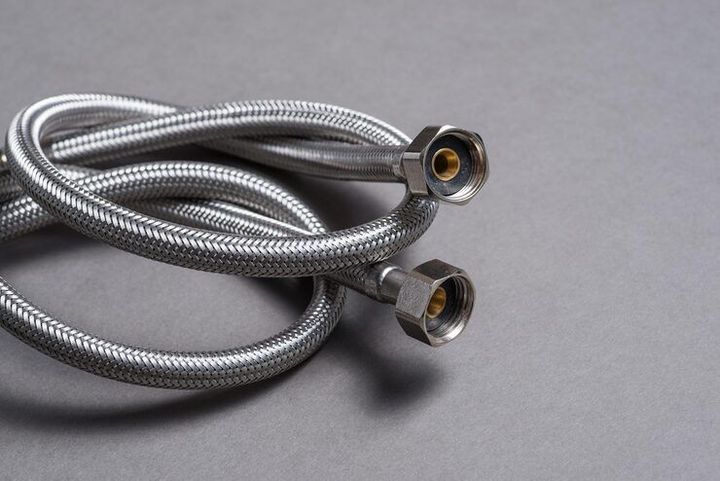
Metal hoses: Use flexible metal construction for applications involving particular temperatures, movement, or pressure conditions.
Each category includes different designs and specifications. The category name alone does not establish whether a hose is suitable for a particular installation.
Importance
Industrial hose pipes support the movement of materials throughout modern production and infrastructure systems. Factories use them to supply compressed air, circulate cooling water, transfer process fluids, and connect mobile equipment. Agriculture relies on hoses for irrigation and fluid delivery, while construction operations use them in hydraulic machinery, pumping, and dust-control systems.
Selecting an unsuitable hose can create operational problems. A material that reacts with the transported fluid may deteriorate, while a hose exposed to pressure beyond its rating may rupture. Incorrect dimensions, poorly matched fittings, and unsuitable temperature limits can also contribute to leakage or equipment failure.
Materials Used in Industrial Hose Pipes
The hose material influences flexibility, chemical compatibility, temperature tolerance, and resistance to wear.
Rubber: Commonly used for air, water, hydraulic fluids, and various industrial materials. Different rubber compounds have different chemical and temperature limits.
Polyvinyl chloride (PVC): Used in selected water, air, and material-transfer applications. Its flexibility and temperature performance depend on formulation and reinforcement.
Polyurethane: Often used in material-handling applications where abrasion resistance and flexibility are important.
Polytetrafluoroethylene (PTFE): Used in applications requiring resistance to many chemicals and particular temperature conditions. Compatibility still depends on the complete hose assembly and operating environment.
Silicone: Used in selected temperature-sensitive, food-processing, and pharmaceutical applications when the relevant specifications are met.
Stainless steel: Used in flexible metal hoses for certain demanding temperature, movement, and chemical environments.
Reinforcement can improve pressure resistance and help control expansion. However, reinforcement does not make every hose suitable for every fluid or operating condition.
Key Factors When Evaluating an Industrial Hose Pipe
Several specifications determine whether a hose is appropriate for an application.
Working pressure: The hose must be rated for the system's operating pressure, including relevant pressure fluctuations. Hydraulic systems may also experience pressure spikes that need to be considered.
Temperature range: Both the transported material and the surrounding environment affect hose performance. Temperatures outside the specified range can weaken the hose or reduce flexibility.
Chemical compatibility: The inner tube, reinforcement, cover, and fittings may respond differently to a chemical. Compatibility information should address the specific substance and concentration.
Diameter and flow requirements: Internal diameter affects flow capacity and pressure loss. The required dimensions depend on the fluid, flow rate, hose length, and system design.
Flexibility and movement: Some applications require frequent bending or resistance to vibration. The hose must accommodate the movement without exceeding its permitted bend radius.
Fittings and connections: Couplings and connectors must match the hose construction, pressure rating, and equipment interface.
Industrial Hose Pipe Materials and Applications
| Hose material or type | Common applications | Important consideration |
|---|---|---|
| Rubber hose | Air, water, and selected hydraulic systems | Compound compatibility and pressure rating |
| PVC hose | Water transfer and selected general-purpose uses | Temperature and flexibility limits |
| Polyurethane hose | Powder and granule handling | Abrasion resistance and material compatibility |
| PTFE-lined hose | Selected chemical-transfer systems | Chemical compatibility and assembly rating |
| Silicone hose | Selected food, laboratory, and temperature-sensitive processes | Applicable hygiene and temperature requirements |
| Flexible metal hose | Selected high-temperature or movement-related applications | Fatigue, corrosion, and pressure limitations |
These examples describe common uses rather than universal suitability. The complete assembly must meet the requirements of the specific application.
Recent Updates
Developments affecting industrial hose pipes during 2024–2026 have continued to focus on material performance, chemical compatibility, traceability, workplace safety, and environmental considerations. The extent of adoption varies by industry, region, and manufacturer.
Material Development and Chemical Compatibility
Manufacturers continue to refine elastomers, thermoplastics, reinforcement structures, and protective covers for particular operating conditions. Changes in industrial fluids and chemical formulations also increase the importance of checking compatibility rather than relying on a material name alone.
Hose assemblies may include identification markings that specify dimensions, pressure ratings, production details, or applicable standards. Clear identification helps operators distinguish between hoses designed for different applications and operating conditions.
Monitoring and Predictive Maintenance
Industrial facilities increasingly use inspection records, pressure monitoring, and condition-based maintenance practices to manage flexible connections. In some installations, sensors and connected monitoring equipment help identify unusual pressure or temperature conditions.
These approaches can support maintenance planning, but they do not replace physical inspection. External damage, internal deterioration, fitting problems, and chemical degradation may not be detected by monitoring systems alone.
Environmental Considerations
Material selection and end-of-life management have gained attention as industrial facilities assess waste and resource use. Some applications are exploring materials with improved durability or options for material recovery, although recycling remains difficult for many multilayer and reinforced hoses.
Longer operating life depends on correct application, installation, storage, and maintenance. Environmental comparisons also need to consider manufacturing, transport, replacement frequency, and disposal rather than focusing on a single material characteristic.
Tools and Resources
Technical references and measurement tools help operators understand industrial hose pipe specifications and operating requirements.
Hose Selection and Calculation Tools
Manufacturer selection guides can help compare hose types, internal diameters, pressure ratings, temperature ranges, and compatible fittings. Flow-rate and pressure-drop calculators can estimate how hose dimensions and length influence fluid movement, although results depend on the fluid's properties and the system configuration.
Standards publications from organizations such as the International Organization for Standardization (ISO), ASTM International, and the Society of Automotive Engineers (SAE) describe requirements or test methods for particular hose categories. The applicable standard depends on the hose's intended use and jurisdiction.
Inspection and Maintenance Resources
Inspection checklists can record visible wear, cracks, bulges, leaks, damaged covers, corrosion, and fitting condition. Pressure gauges and temperature instruments help verify operating conditions, while manufacturer documentation identifies the limits and inspection procedures applicable to a specific assembly.
Useful records typically include:
Hose identification and installation location.
Specified working pressure and temperature range.
Fluid or material being transported.
Inspection findings and replacement history.
Fitting details and applicable technical standards.
These resources support organized maintenance and help distinguish general guidance from requirements specific to a particular hose assembly.
FAQs
What are the main types of industrial hose pipes?
Common types include hydraulic, air, water, chemical, suction and discharge, food-grade, material-handling, and metal hoses. Each type has different construction and operating limits.
Which materials are used to manufacture industrial hose pipes?
Common materials include rubber, PVC, polyurethane, PTFE, silicone, and stainless steel. The choice depends on the transported material, pressure, temperature, flexibility, and environmental conditions.
How do you select an industrial hose pipe for an application?
Selection depends on working pressure, temperature, chemical compatibility, internal diameter, flow requirements, flexibility, and connection type. The specifications of the complete hose assembly must match the intended operating conditions.
What are the common industrial applications of hose pipes?
Industrial hose pipes are used in manufacturing, construction, agriculture, chemical processing, food production, and material handling. They transport fluids, gases, compressed air, and certain dry materials between equipment and locations.
How can industrial hose pipe damage be identified?
Visible cracks, bulges, leaks, exposed reinforcement, abrasion, and damaged fittings can indicate deterioration. Internal chemical damage may not be visible, so inspection procedures and replacement criteria should follow the applicable technical guidance.
Conclusion
Industrial hose pipes provide flexible connections for transporting liquids, gases, air, and other materials across many industries. Their performance depends on material selection, reinforcement, pressure and temperature ratings, chemical compatibility, and fitting design. Current developments emphasize material performance, clearer identification, monitoring, and responsible material management. Understanding these factors helps explain why hose specifications must match the conditions in which an assembly operates.