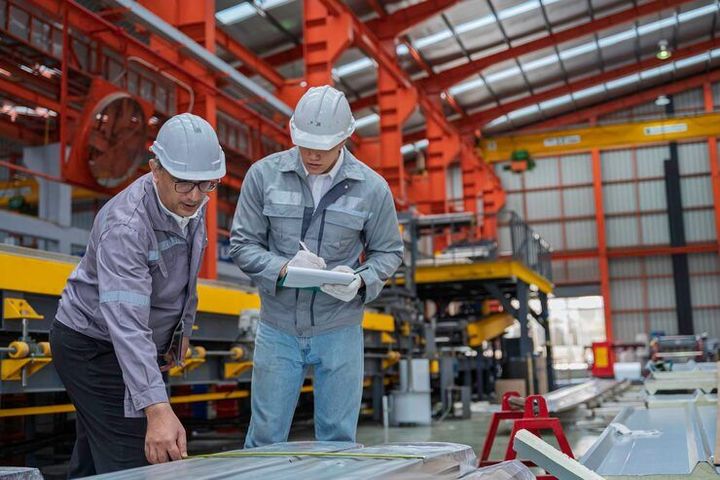
Industrial Manufacturing Project Explanation of Development, Execution, and Management
An industrial manufacturing project is a planned effort to establish, expand, upgrade, or reorganize a facility that produces goods or industrial materials.
Understanding an industrial manufacturing project explanation of development, execution, and management helps clarify how an idea becomes an operational production system. These projects may involve constructing a new factory, installing machinery, expanding a production line, or introducing automation into an existing facility.
Industrial manufacturing projects have developed alongside changes in engineering, production methods, transportation, and industrial technology. As manufacturing activities became more complex, organizations needed structured approaches to coordinate equipment, buildings, materials, workers, budgets, and production schedules. Project management provides a framework for organizing these activities and tracking progress from initial planning to operational handover.
The scope of a project depends on its purpose and the type of products being manufactured. A food processing facility may require specialized hygiene controls, while a metalworking plant may need heavy machinery, ventilation, and material-handling systems. Despite these differences, most projects follow a similar sequence involving feasibility assessment, design, procurement, construction, installation, testing, and commissioning.
Main Stages of Industrial Project Development
Industrial manufacturing project development generally begins by identifying a production requirement or operational problem. The project team then examines technical requirements, available space, utilities, environmental considerations, and expected production capacity.
The main stages include:
Concept development: Defines the project purpose, intended output, and general scope.
Feasibility assessment: Examines technical requirements, financial assumptions, regulatory obligations, and practical constraints.
Engineering and design: Establishes facility layouts, machinery specifications, electrical systems, process flows, and safety provisions.
Procurement: Coordinates the acquisition of machinery, construction materials, components, and technical equipment.
Construction and installation: Prepares the facility and installs production equipment and supporting infrastructure.
Testing and commissioning: Checks whether equipment and integrated systems operate according to their specifications.
Operational handover: Transfers documentation, operating procedures, and relevant training to the personnel responsible for production.
These stages may overlap. For example, procurement of long-lead machinery can begin while detailed engineering work is still underway, provided that important design requirements have been confirmed.
Key Participants in a Manufacturing Project
Industrial projects typically involve several groups with different responsibilities. Project managers coordinate schedules, budgets, communication, and risks, while engineers develop technical designs and verify equipment requirements. Construction teams, equipment suppliers, safety specialists, regulatory authorities, and future plant operators may also participate.
Clear responsibilities help prevent conflicting instructions and reduce delays caused by missing information. Regular coordination is particularly important when construction, electrical installation, automation, and mechanical work must be completed in a specific sequence.
Importance
Industrial manufacturing projects influence the availability of products, the efficiency of production facilities, and the development of industrial infrastructure. They affect manufacturers, employees, suppliers, nearby communities, and customers who depend on manufactured goods. Effective planning helps organizations coordinate complex activities while addressing safety, environmental protection, production quality, and operational continuity.
A poorly coordinated project may experience design changes, equipment incompatibility, material shortages, or delays during commissioning. These issues can affect production schedules and require additional resources to resolve. A structured management approach helps identify such problems earlier and provides a process for evaluating their consequences.
Project Planning and Resource Management
Planning establishes the relationship between project scope, schedule, resources, and expected results. The project team identifies the tasks that must be completed, estimates their duration, assigns responsibilities, and determines which activities depend on others.
Resource planning covers machinery, materials, labor requirements, utilities, technical expertise, and available funding. Project schedules often use milestones to mark important stages, such as design approval, equipment delivery, construction completion, and commissioning.
Risk, Quality, and Safety Management
Industrial manufacturing projects involve physical, technical, financial, and environmental risks. Common examples include equipment failure, construction hazards, supply interruptions, design errors, and difficulties integrating automated systems.
Risk management usually involves identifying potential problems, estimating their likelihood and consequences, and establishing suitable controls. Quality management includes checking materials, reviewing engineering documents, inspecting installations, and conducting tests against defined specifications.
Safety planning is necessary throughout the project rather than only during construction. Depending on the facility, controls may address electrical hazards, machine guarding, hazardous substances, fire protection, confined spaces, and worker access to operating equipment.
Common Project Performance Indicators
| Indicator | What it measures | Why it matters |
|---|---|---|
| Schedule variance | Difference between planned and actual progress | Identifies delays or schedule changes |
| Budget variance | Difference between planned and actual expenditure | Helps monitor financial performance |
| Production capacity | Intended or demonstrated output over a defined period | Indicates the facility's production capability |
| Defect rate | Proportion of products that fail specified checks | Helps assess manufacturing quality |
| Equipment availability | Proportion of time equipment is ready for operation | Supports production planning |
| Safety performance | Recorded incidents and implementation of safety controls | Helps evaluate workplace risk management |
These indicators should be interpreted in context. For instance, installed production capacity does not necessarily equal actual output because performance may also depend on staffing, raw materials, maintenance, product changes, and operating schedules.
Recent Updates
Developments in industrial manufacturing projects during 2024–2026 have increasingly emphasized digital engineering, automation, energy efficiency, supply chain resilience, and data-based project monitoring. Adoption varies according to industry, project size, technical requirements, and regional regulations.
Digital Planning and Project Coordination
Building information modeling (BIM), three-dimensional plant design, and digital project platforms help teams coordinate building structures, machinery, piping, electrical systems, and other components. These tools can reveal spatial conflicts before installation begins and help teams maintain consistent project information.
Digital dashboards also bring schedules, procurement records, construction progress, and risk registers into a shared view. Their usefulness depends on accurate data, consistent updates, and clear responsibility for resolving identified problems.
Automation and Smart Manufacturing
Industrial projects increasingly incorporate programmable controllers, industrial robots, machine vision, sensors, and connected production systems. These technologies can support repetitive operations, process monitoring, and product inspection, depending on the application.
Automation also creates integration requirements involving software, networks, cybersecurity, employee training, and equipment compatibility. Project teams need to account for these requirements during design rather than treating them as separate tasks after machinery has been installed.
Energy Efficiency and Environmental Considerations
Energy efficiency has become an important consideration in factory planning and equipment selection. Projects may examine efficient motors, variable-speed drives, heat recovery, improved insulation, and energy monitoring systems.
Environmental planning can also include water use, waste management, emissions control, and material selection. The practical results depend on the facility's processes, local conditions, equipment performance, and how the systems are operated after commissioning.
Tools and Resources
Several tools support the development, execution, and management of industrial manufacturing projects.
Planning and Monitoring Tools
Project scheduling software helps teams organize activities, identify dependencies, assign responsibilities, and compare planned progress with actual results. Gantt charts display activities over time, while risk registers record potential problems, their possible effects, and assigned mitigation measures.
Spreadsheets can support procurement tracking, budget monitoring, equipment lists, and commissioning checklists. More complex projects may use integrated project management platforms to coordinate information across engineering, construction, and operations teams.
Engineering and Industry Resources
Computer-aided design (CAD) tools support engineering drawings and equipment layouts. BIM and three-dimensional plant design platforms help coordinate physical structures and technical systems. Energy assessment tools can estimate electricity use and identify areas for further investigation.
Useful reference sources include:
National Institute of Standards and Technology (NIST): Publishes research and guidance related to manufacturing systems, measurement, and industrial technology.
International Organization for Standardization (ISO): Develops standards covering quality management, environmental management, and occupational health and safety.
Project Management Institute (PMI): Provides project management frameworks, terminology, and educational materials.
U.S. Department of Energy: Publishes industrial energy efficiency and manufacturing guidance.
These resources provide general technical and management information. Individual projects must also follow applicable building codes, environmental requirements, equipment specifications, and workplace safety regulations.
FAQs
What is an industrial manufacturing project?
An industrial manufacturing project is a planned undertaking to establish, expand, modernize, or reorganize a production facility. It may involve construction, machinery installation, process redesign, or automation.
What are the main stages of industrial manufacturing project development?
The main stages generally include concept development, feasibility assessment, engineering design, procurement, construction, equipment installation, testing, commissioning, and operational handover. Some stages may overlap depending on project requirements.
How is an industrial manufacturing project managed?
Project management coordinates scope, schedules, resources, budgets, risks, quality checks, and communication. Project managers track progress against approved plans and coordinate changes when technical or operational conditions shift.
What tools are used for industrial manufacturing project management?
Common tools include project scheduling software, Gantt charts, risk registers, spreadsheets, CAD platforms, and digital engineering systems. The choice depends on project complexity and the information that different teams need to share.
Why is commissioning important in an industrial manufacturing project?
Commissioning verifies that installed equipment and integrated systems operate according to their specified requirements. It may include functional testing, safety checks, performance measurements, and operator training before routine production begins.
Conclusion
Industrial manufacturing projects combine planning, engineering, procurement, construction, and operational preparation to establish or improve production facilities. Their outcomes depend on coordinated management of schedules, resources, technical requirements, quality, and safety. Digital engineering, automation, and energy monitoring continue to influence how these projects are developed and executed. Understanding the project lifecycle provides a foundation for examining how industrial facilities move from an initial concept to operational production.