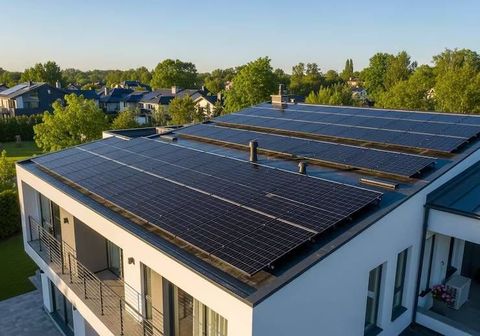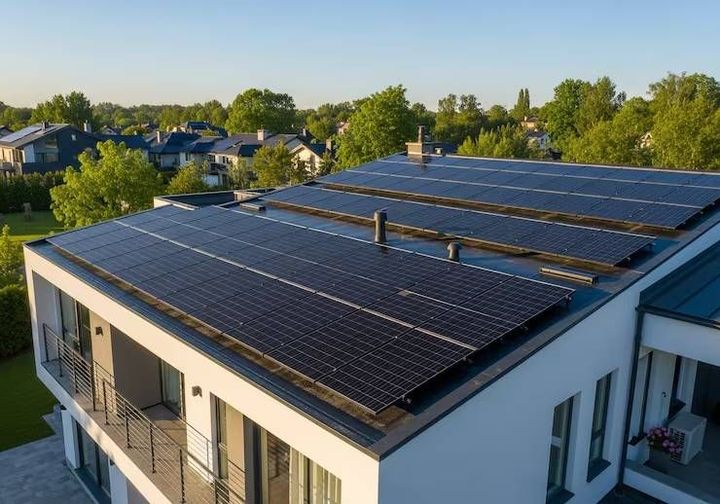
Solar-Powered Homes Basics: Learn About Solar Systems and Home Energy Use
Solar-powered homes use solar energy systems to convert sunlight into electricity for household activities.
A typical system may include solar panels, an inverter, electrical equipment, monitoring technology, and, in some homes, battery storage. Together, these components can help a household generate electricity on-site rather than relying entirely on electricity delivered through the local grid.
The idea comes from the wider development of solar photovoltaic technology, which converts sunlight directly into electrical energy. As photovoltaic systems became more practical for buildings, solar panels began appearing on residential rooftops, garages, and other suitable structures.
Solar-powered homes are designed around a simple principle: sunlight is available during daylight hours, while household electricity use can occur throughout the day and night. Managing the difference between solar generation and household demand is therefore an important part of understanding residential solar systems.
How a Home Solar System Works
Solar panels contain photovoltaic cells that respond to sunlight. When sunlight reaches these cells, they produce direct-current electricity. Because most household appliances use alternating-current electricity, an inverter normally converts the electricity into a suitable form for household use.
A basic solar-powered home may operate through several stages:
- Solar panels generate electricity when sufficient sunlight is available.
- An inverter converts the electricity into a form used by household circuits.
- Household appliances use electricity as they operate.
- A battery can store some generated electricity for later use.
- The electrical grid can provide additional electricity when household demand exceeds available solar generation.
The exact arrangement depends on the building, local electricity network, household consumption, and system design.
Main Components
Solar panels are the most visible part of a residential solar system, but they are only one component. Inverters, mounting structures, wiring, electrical protection equipment, and monitoring systems also contribute to system operation.
Battery storage is an optional component. It stores electricity generated at one time so that it can potentially be used later, such as during evening hours. Battery capacity, charging patterns, efficiency, and household demand all influence how much electricity can be stored and used.
Importance
Solar-powered homes have become an important part of discussions about household energy use, electricity generation, and environmental planning. Residential buildings consume electricity for lighting, refrigeration, heating, cooling, electronics, cooking, water heating, and other everyday activities.
Household Energy Use
One important consideration is when electricity is consumed. Solar generation generally follows daylight conditions, while household demand can continue after sunset. A household that uses substantial electricity during daylight may directly use more solar generation, while another household may have greater evening demand.
Understanding these patterns can help explain why the size of a solar system cannot be determined simply by looking at the number of appliances in a home. Household consumption, local sunlight conditions, roof characteristics, system orientation, and electrical requirements all influence system design.
Energy Resilience and Grid Interaction
Solar-powered homes can interact with the electrical grid in different ways. Some systems remain connected to the grid and draw electricity when solar production is insufficient. Depending on local regulations and the system configuration, surplus electricity may also be exported to the grid.
Battery systems can change this pattern by allowing some electricity generated earlier to remain available later. However, batteries have technical limits and do not automatically provide electricity during every grid interruption. Backup operation generally requires equipment specifically designed for that purpose.
Environmental Considerations
Solar electricity does not require fuel combustion at the point where photovoltaic panels generate electricity. This means residential solar generation can be part of broader efforts to reduce reliance on electricity generated from fossil fuels, although the environmental impact of a system also includes manufacturing, transportation, installation, maintenance, and eventual equipment disposal.
The environmental profile of electricity therefore varies according to the local electricity mix and the complete life cycle of the equipment.
Factors That Influence Solar Performance
Several factors can affect how much electricity a residential solar system produces:
| Factor | Effect on Solar Generation |
|---|---|
| Sunlight availability | More usable sunlight generally provides greater generation |
| Roof orientation | Influences how much sunlight reaches the panels |
| Shading | Trees and nearby structures can reduce generation |
| Panel condition | Dirt, physical damage, or deterioration can affect output |
| Temperature | Panel electrical performance changes with temperature |
| System design | Equipment configuration influences overall operation |
| Household demand | Determines how generated electricity is used |
These factors explain why two homes with similar solar panel areas can have different electricity-generation patterns.
Recent Updates
Residential solar technology has continued to develop through improvements in photovoltaic panels, inverters, batteries, monitoring systems, and energy-management technology. Between 2024 and 2026, attention has increasingly focused on combining solar generation with household energy storage and more responsive energy management.
Solar and Battery Integration
Battery storage has become a more visible part of residential energy planning. Modern systems can monitor solar production, battery levels, household demand, and grid conditions. Some configurations can automatically adjust how electricity is used or stored according to programmed settings.
Battery technology has also developed toward greater energy density and improved monitoring. Even so, battery systems remain subject to factors such as temperature, charging cycles, capacity, installation requirements, and equipment compatibility.
Smarter Energy Management
Home energy management is increasingly connected with smart meters, connected appliances, electric vehicles, heat pumps, and other electrical equipment. These technologies can provide households with more information about when electricity is being generated and consumed.
The broader trend is toward treating the home as an interconnected energy system rather than viewing solar panels as an isolated piece of equipment. Monitoring platforms can provide information about daily production, consumption, battery activity, and grid interaction.
Changes in Residential Solar Planning
Solar planning is also becoming more closely linked with household electrification. As homes adopt technologies such as electric vehicles and electric heating equipment, electricity demand can change substantially.
This makes household energy assessment increasingly important. A solar-powered home may have different electricity requirements depending on building size, climate, occupancy, appliances, transportation patterns, and heating or cooling arrangements.
Tools and Resources
Several tools can help people understand residential solar systems before considering technical planning. Solar production calculators can estimate potential electricity generation using information such as location, panel orientation, roof characteristics, and available sunlight.
Government energy departments, electricity regulators, utility websites, and renewable-energy organizations can also provide information about grid connection requirements, household energy efficiency, and applicable regulations. These sources are useful because electricity rules differ between countries, regions, and utility networks.
Energy-monitoring platforms can show household electricity consumption over time. A simple spreadsheet can also be used to record monthly electricity usage, major appliances, operating schedules, and seasonal changes.
Useful resources may include:
- Solar radiation and solar potential maps
- Residential solar production calculators
- Household electricity-use calculators
- Utility grid-connection information
- Battery capacity and energy-use calculators
- Home energy monitoring dashboards
- Solar panel performance monitoring platforms
When comparing information from different tools, it is important to check the assumptions used by each calculator. Estimates can differ because they may use different sunlight data, system assumptions, efficiency values, or household consumption patterns.
FAQs
What are Solar-Powered Homes?
Solar-powered homes are residential buildings that use solar energy systems to generate electricity from sunlight. A system may work alongside the electrical grid and can also include battery storage.
How do Solar-Powered Homes use electricity at night?
Solar panels generally do not generate electricity from sunlight after sunset. A home can use electricity from a battery if storage is installed, or it can draw electricity from the local grid when available.
Do Solar-Powered Homes need batteries?
No. A residential solar system can operate without battery storage when it is connected to the electrical grid. Batteries are an additional component that can store some generated electricity for later use.
How much electricity can a Solar-Powered Home generate?
Generation depends on factors such as panel capacity, sunlight availability, roof orientation, shading, weather, equipment characteristics, and system condition. Actual production can vary from one location and season to another.
Can Solar-Powered Homes work during a power outage?
A standard grid-connected solar system may shut down during a grid outage for electrical safety reasons. Continued household operation during an outage generally requires a suitable backup configuration, which may include battery storage and compatible control equipment.
Conclusion
Solar-powered homes combine photovoltaic generation with household electrical systems to convert sunlight into usable electricity. Their operation depends on solar availability, household demand, system design, and interaction with the electrical grid. Recent developments have increased the integration of batteries, monitoring platforms, smart energy controls, and other household technologies. Understanding these components and their relationships provides a clearer picture of how residential solar energy can function in everyday settings.